 Skip to main content




























Great Blue Heron
Ardea herodias
At a Glance
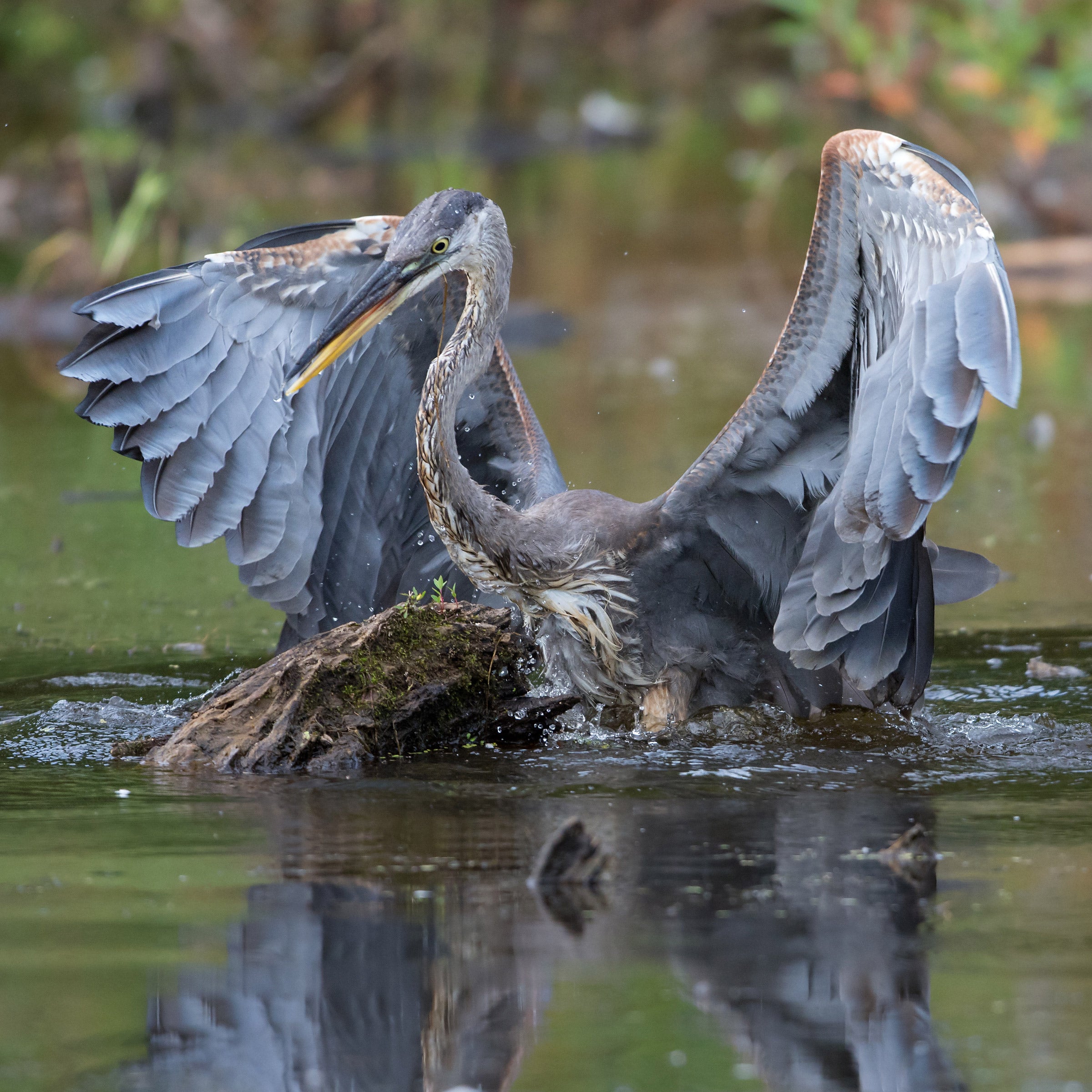
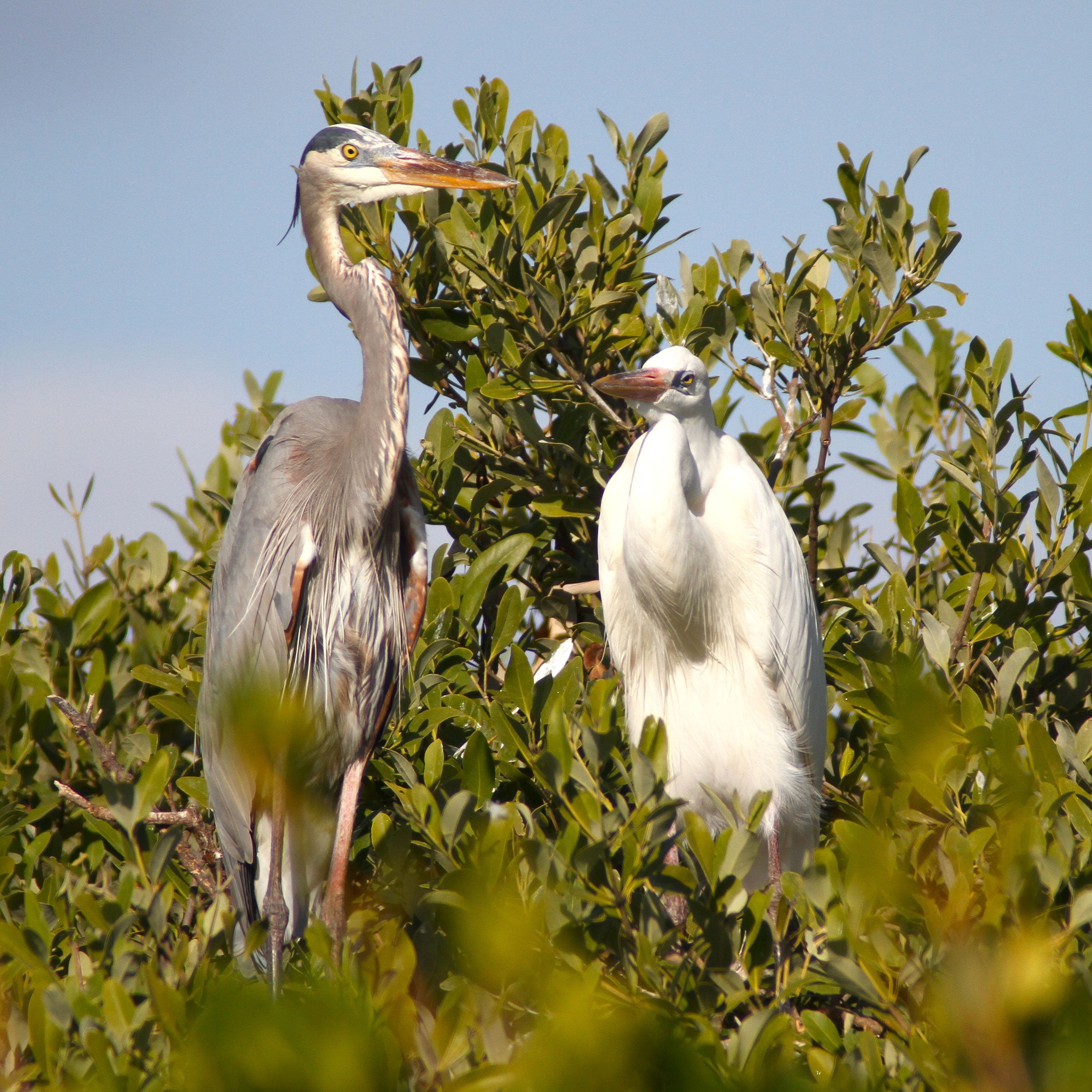
Widespread and familiar (though often called 'crane'), the largest heron in North America. Often seen standing silently along inland rivers or lakeshores, or flying high overhead, with slow wingbeats, its head hunched back onto its shoulders. Highly adaptable, it thrives around all kinds of waters from subtropical mangrove swamps to desert rivers to the coastline of southern Alaska. With its variable diet it is able to spend the winter farther north than most herons, even in areas where most waters freeze. A form in southern Florida (called 'Great White Heron') is slightly larger and entirely white.
All bird guide text and rangemaps adapted from Lives of North American Birds by Kenn Kaufman© 1996, used by permission of Houghton Mifflin Harcourt Publishing Company. All rights reserved.
Category
Herons, Egrets, Bitterns, Long-legged Waders
Conservation
Low Concern
Habitat
Coasts and Shorelines, Forests and Woodlands, Freshwater Wetlands, Lakes, Ponds, and Rivers, Saltwater Wetlands
Region
Alaska and The North, California, Eastern Canada, Florida, Great Lakes, Mid Atlantic, New England, Northwest, Plains, Rocky Mountains, Southeast, Southwest, Texas, Western Canada
Behavior
Direct Flight, Soaring
Population
700.000
Range & Identification
Migration & Range Maps
Northern populations east of Rockies are migratory, some going to Caribbean, Central America, or northern South America. Migrates by day or night, alone or in flocks. Some wander well to the north in late summer. Populations along Pacific Coast may be permanent residents, even as far north as southeastern Alaska.
Description
39-52" (99-132 cm). W. 5'10 (1.8 m). Huge and gray, with massive bill, black crown stripe on whitish head. Other grayish herons have different head pattern; Sandhill Crane has different body shape. Two distinct forms of Great Blue are restricted to Florida: "Great White Heron" (all white with yellow bill, pale legs) and "Wurdemann's Heron" (white-headed), mostly in the Keys.
Size
About the size of a Heron, About the size of a Mallard or Herring Gull
Color
Black, Blue, Gray, White, Yellow
Wing Shape
Broad, Fingered, Long, Pointed
Tail Shape
Short
Songs and Calls
A harsh squawk.
Call Pattern
Flat, Simple
Call Type
Croak/Quack, Scream
Habitat
Marshes, swamps, shores, tideflats. Very adaptable. Forages in any kind of calm fresh waters or slow-moving rivers, also in shallow coastal bays. Nests in trees or shrubs near water, sometimes on ground in areas free of predators. "Great White" form is mostly in salt water habitats.
Sign up for Audubon's newsletter to learn more about birds like the Great Blue Heron
Behavior
Eggs
3-5, sometimes 2-7. Pale blue. Incubation is by both sexes, 25-30 days.
Young
Both parents feed young, by regurgitation. Young capable of flight at about 60 days, depart nest at about 65-90 days. 1 brood per year in north, sometimes 2 in south.
Feeding Behavior
Forages mostly by standing still or walking very slowly in shallow water, waiting for fish to swim near, then striking with rapid thrust of bill. Also forages on shore, from floating objects, and in grassland. May hunt by day or night.
Diet
Highly variable and adaptable. Eats mostly fish, but also frogs, salamanders, turtles, snakes, insects, rodents, birds. Has been seen stalking voles and gophers in fields, capturing rails at edge of marsh, eating many species of small waterbirds.
Nesting
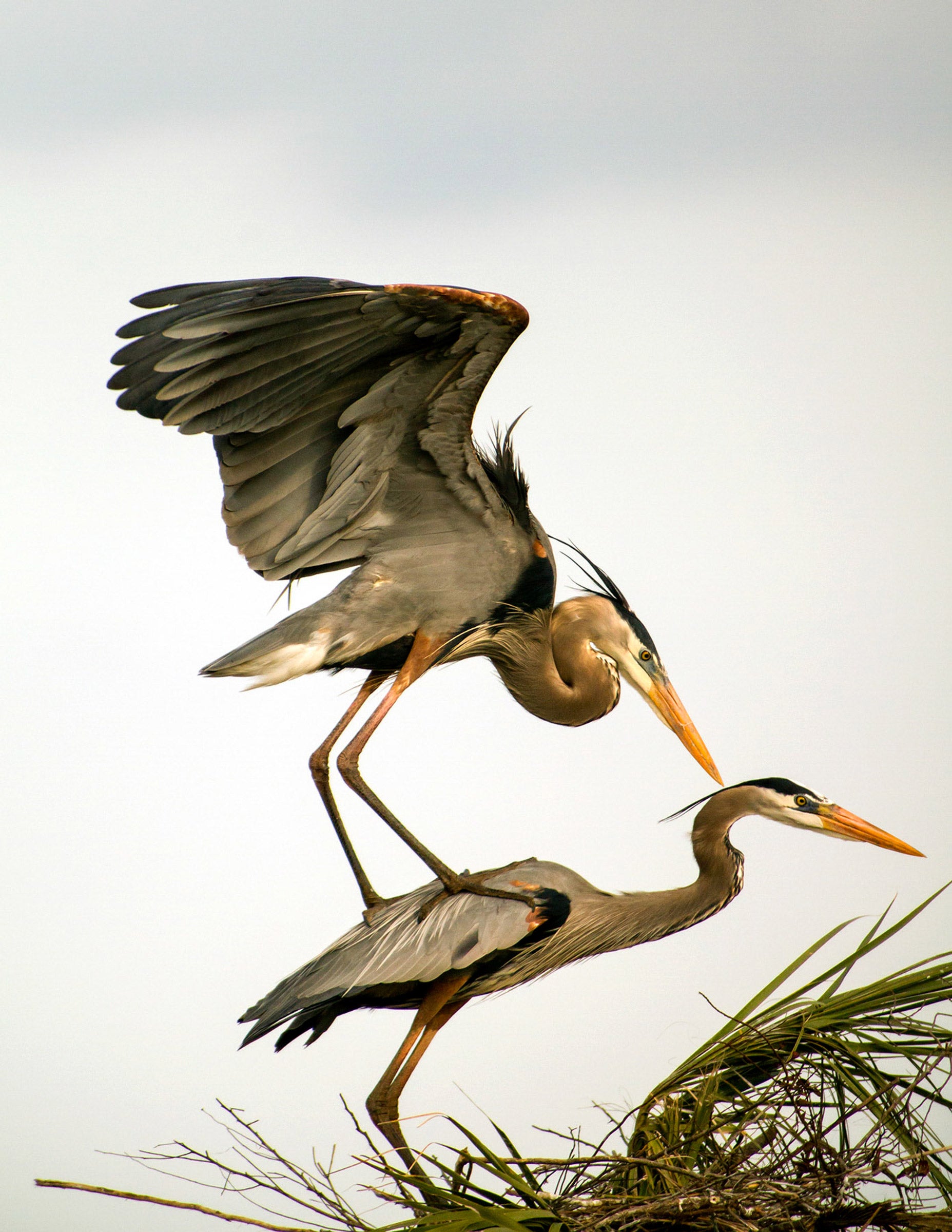
Breeds in colonies, often of this species alone, sometimes mixed with other wading birds; rarely in isolated pairs. Male chooses nest site and displays there to attract mate. Displays include stretching neck up with bill pointing skyward, flying in circles above colony with neck extended, stretching neck forward with head and neck feathers erected and then snapping bill shut. Nest: Site highly variable, usually in trees 20-60' above ground or water; sometimes in low shrubs, sometimes on ground (on predator-free islands), sometimes well above 100' in tree. Nest (built mostly by female, with material gathered mostly by male) is a platform of sticks, sometimes quite large.
Climate Vulnerability
Conservation Status
Formerly often shot, simply because it made a conspicuous and easy target, but this rarely occurs today. Colonies may be disrupted by human disturbance, especially early in season. Still common and widespread, numbers probably stable.
Climate Threats Facing the Great Blue Heron
Choose a temperature scenario below to see which threats will affect this species as warming increases. The same climate change-driven threats that put birds at risk will affect other wildlife and people, too.